

Tradition, precision and a touch of the Far East
The tradition of alcohol production in Japan is very old. Sake is said to have been distilled since the third century BC.
Japanese whisky has written an impressive success story in recent decades. Although production only began in 1924, it is now one of the most renowned whisky styles in the world. Its roots lie in the Scottish craft: Masataka Taketsuru brought the precise knowledge of malt distillation from Scotland to Japan, laying the foundations for an industry that stands for perfection, craftsmanship and exceptional flavours.
On our knowledge page, you can find out how Japanese whisky is made, what characterises it and why distilleries such as Yamazaki, Hakushu and Yoichi are so popular with beginners and connoisseurs alike. Discover the history, styles and flavour diversity of a country that masterfully combines tradition and innovation.

The father of Japanese whisky

Masataka Taketsuru is considered the father of Japanese whisky He was born in Hiroshima in 1894. He studied in Osaka and travelled to Scotland in 1918 to learn how to make whisky. There he worked in distilleries such as Longmorn and Hazelburn and met his wife Rita, with whom he returned to Japan in 1920.
After the failure of a whisky project, Taketsuru joined Kotobukiya (later Suntory) in 1923 and managed the construction of the Yamazaki distillery. In 1934, he founded the Yoichi distillery in Hokkaido, whose first whisky was released in 1940. In order to survive financially, he initially sold apple juice - his company Dai Nippon Kaju later became Nikka.
Taketsuru favoured traditional Scottish methods such as direct-fired stills. In 1963, he imported Coffey stills for grain whisky, followed by the Miyagikyo distillery in 1969 to expand the product range.
After Rita's death in 1961, he dedicated the Super Nikka blended whisky to her. Taketsuru died in 1979, but his legacy lives on in Nikka's whiskies. Today, Japanese whisky enjoys worldwide recognition - a credit to his pioneering spirit.
The development of Japanese whisky
There are now distilleries with a global reputation. These include Suntory and Nikka. Other renowned distilleries are Hakushu, Chichibu and Miyagikyo. Since the first World Whiskies Awards in 2007 at the latest, Japanese whisky has been one of the world's best and, alongside Scotland, Ireland, the USA and India, one of the greatest. Kanpai!
Japanese whisky offers a variety of styles and is considered smooth, balanced and sometimes subtle. Global demand means that there is sometimes a shortage, causing the price to soar. Limited bottlings are coveted as collector's items.
Interesting to know!
If Japanese terms, city names or images of well-known Japanese places such as mountains or rivers are to appear on the bottle label, all ingredients must come from Japan. The production process, including storage and bottling, must also take place in Japan.
In addition to ex-bourbon and various sherry casks, storage also takes place in Mizunara oak casks and occasionally in Sakura (cherry) casks.
All the details about the making of Japanese whiskey.
Single Malt
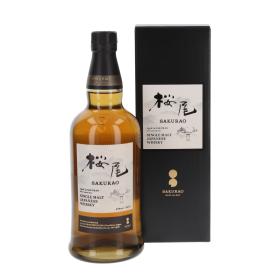
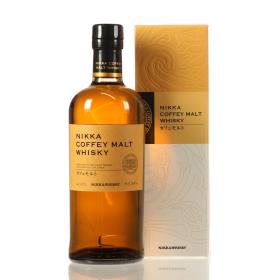
Following the Scottish model, the Japanese single malt is also made exclusively from barley malt and is distilled in pot stills to a maximum alcohol content of 95%. The subsequent maturation period in casks must also be at least three years. It is bottled with at least 40% alcohol. Single malt comes from a single distillery.



Blended Whisky
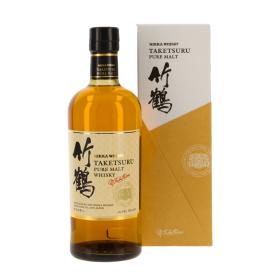
Japan offers a speciality here! Blending whisky, i.e. creating a special blend, is considered a fine art. It is the balanced flavour of a Japanese blend that appeals to the Japanese. In terms of hierarchy and reputation, the master blender is above the distiller. For a Japanese blend, 10 to 40 per cent malt whisky is used, the rest is grain whisky.
The Japanese love their blend - in summer, they drink it with plenty of cold water, even with food. In winter, it is mixed with warm or even hot water to make a kind of grog.


Grain Whisky
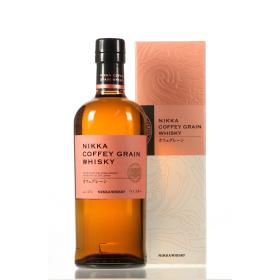
In addition to a small proportion of malt, various other types of grain such as wheat or maize are used. The grains are predominantly processed into blends and only very rarely bottled as single grains.

Japanese Whisky and Fukushima
It has been over ten years since the nuclear accident at the Fukushima nuclear power plant in Japan! If you are interested in the topic, watch the video and read our article from back then.
Conclusion
Japanese whisky is characterised by precision, clarity and stylistic diversity. Although it is orientated towards Scottish methods, it develops its own signature: elegant, balanced and often particularly harmonious. From delicate, fruity notes to subtle smoky flavours, it offers a broad spectrum that appeals to beginners as well as connoisseurs and gourmets. Those who remain curious will discover new nuances in every bottle - an invitation to explore the world of Japanese whisky further.












To comment, you must be logged in