

When you hear rum, you probably think of the Caribbean - the sea and pirates.
The origins of rum are closely linked to sugar cane cultivation!
In the 17th century, the European colonial powers brought sugar cane from Asia to the Caribbean and sugar cane plantations were established. At first, only sugar - a very popular, valuable and expensive commodity - was produced, but soon alcohol was distilled. Workers on the plantations discovered that the by-product of sugar production, molasses, could be fermented and distilled to produce a strong alcoholic drink. "Tafia" was the name of the raw, unfiltered precursor and both the quality and flavour were still a far cry from today's rum.

Rum culture
Rum is more than just a drink! It is part of the culture and tradition of many countries. Festivals and celebrations dedicated to rum take place in different parts of the world. At these events, visitors can sample different varieties, take part in tastings and learn more about the history of rum. It is an opportunity to celebrate the love for this drink and enjoy the company.
How rum was born
The distillation technique was refined by the plantation owners and rum quickly became popular. In addition to the sugar trade, the rum trade brought the landowners huge profits. But sailors and pirates were also interested in the new spirit. For the European powers, especially England, France and Spain, rum played a central role in the triangular trade, in which slaves, sugar and rum were traded between Africa, the Caribbean and Europe.
Barbados is often cited as the country of origin of rum, but this cannot be proven with certainty. Brazil is also under discussion. Sugar cane plantations were established in the Caribbean, as in the entire South American region along the coasts.
The first documented mention of rum is in 1650 as 'Rumbustion', which means 'great tumult'. Today, in addition to the term rum, the English term 'Ron' and the French 'Rhum' also exist
From brandy to a popular spirit

Sugar cane production produces large quantities of molasses as a by-product. The slaves on the plantations were the first to realise that this could be fermented and drunk as sugar cane brandy. The plantation owners further developed the production process and the molasses spirit eventually became rum, although not yet with the flavour we know today, and rum quickly became a popular drink in the Caribbean. However, it was not until the 18th century that it found its way to Europe.
Also in the 18th century, rum was so popular that it became America's national drink. Records speak of an annual consumption of around 14 litres per person. Prohibition temporarily curbed rum consumption. In the 1960s, the tiki culture, in which everything to do with the Caribbean became popular, fascinated and drove rum consumption up again.
Interesting relationship
For every 2 kilos of sugar obtained, 1 kilo of molasses can be used for rum production.
Seafaring and rum
"And I stayed alive, I tell you, and that's what the rum did"
Quote from the novel Treasure Island by Robert L. Stevenson
The English navy contributed significantly to the success of rum. After realising that beer or wine carried on board ships would not keep for long in the high temperatures of the Caribbean, they began to carry rum. And this is how the pirates came into play in rum history, who were attracted by rum. Since then, many tales have grown up around pirates and rum.
The morale of the Royal Navy troops was boosted by the daily distribution of a rum ration to the sailors!
The daily ration was half a litre per man! Rum was first issued to British sailors as part of their pay in 1655, and from 1731 the British Royal Navy officially introduced this ration - known as Navy Rum! Initially, rum was served neat with an alcohol content of up to 75%, but was later diluted with water. We still know the rum grog today.
Until 1970, the British Royal Navy issued a daily rum ration to the crew. If you want to try rum as it was served until 1970, you should try Pusser's Rum. Charles Tobias bought the recipe from the British Navy and sold it under this name ever since.
The end of a tradition: Black Tot Day
For centuries, the daily rum ration was an integral part of life for sailors in the Royal Navy. The so-called "tot", usually half a pint of high-proof rum, not only served as a tonic, but was also part of military discipline and camaraderie.
On 31 July 1970, however, this centuries-old tradition came to an end. On this day, the sailors received their last official rum ration. The Royal Navy had decided that alcohol on board was no longer appropriate to ensure safety and operational readiness. This day went down in history as "Black Tot Day".
On board, the event was celebrated with mixed feelings. Some crews held symbolic mourning ceremonies, wore black armbands or ceremoniously poured the last "tot" overboard. Today, Black Tot Day reminds rum lovers all over the world of the close connection between rum and maritime history.
Post-ripening - unintentional, but effective!
During the weeks of shipping in wooden barrels, the rum often began to mature unnoticed. Temperature fluctuations, sea air and the natural movement of the ship allowed the rum to come into more intensive contact with the wood. As a result, it absorbed additional flavours, became rounder in taste and often developed a surprising depth. What was originally a side effect of transport turned out to be a welcome quality feature - and contributed to the rum being even more sought-after on arrival than at the start of the voyage.
A special form of Navy rum
Navy Strength Rum is a separate form of Navy Rum. It has an alcohol content of around 57% by volume (ABV) and is particularly strong. The term "Navy Strength" comes from the time when rum had to be so strong that it could still be distilled. To prove that the rum was not watered down, it was poured onto gunpowder and set alight. If it had over 57 per cent alcohol - or 100 proof - the gunpowder burned and you had proof of a Navy Strength rum.
This high alcohol content makes for a more intense and stronger flavour, reminiscent of the Royal Navy tradition.
The modern rum
80% of the world's rum production comes from the Caribbean. The remaining 20% is spread across the southern hemisphere. Rum is also imported to European countries, where it is further matured and stored.
Today, rum is available in many different varieties, from light white rum to heavy, mature rum.
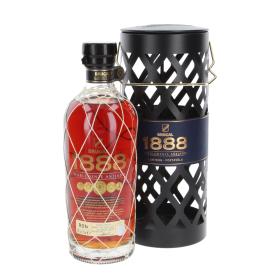
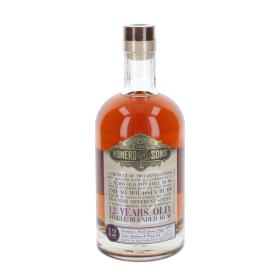
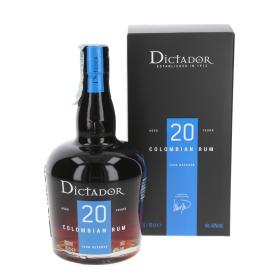
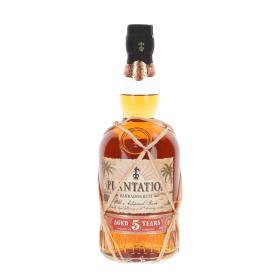
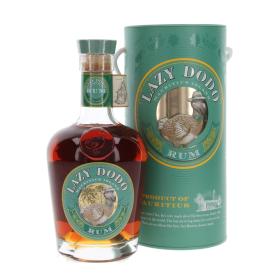
The many elaborately and colourfully designed bottles, which catch the eye alongside other spirits, are beautiful to look at.
Conclusion
Rum is not just a drink, but also a cultural heritage that reflects the history of colonisation and the sugar cane trade.

















To comment, you must be logged in