
The production

Muskateller is neither grown in a specific region nor is there a specific historical production method. The wines only have the grape variety in common. Within the Muskateller family, commonalities in taste can be found: Almost all vines are very fruity, sweet and floral.
Muskateller can be made from forward wine, pressed wine, as well as from organically or conventionally grown grapes. Apart from the choice of grape variety, there are almost no rules for Muskateller production. The variety has low soil requirements; light to medium soils with a low lime content are preferable.
There is both the yellow Muskateller and the red Muskateller, which is a mutation of the yellow one. The yellow Muskateller can be used to produce spicy white wines with the typical intense muscat tone. The wines, and also sparkling wines, are vinified both dry and sweet. Ripe berries have a high sugar content. In the production of liqueur wines, an extract with a uniquely high sugar concentration is therefore obtained during pressing, which is partially fermented with alcohol. This process is then slowed down again by the addition of wine alcohol.
In warmer and hotter regions, the grape variety produces excellent noble sweet Muscat wines and spicy dessert wines. These can be found in Italy, France, Spain, Portugal (Moscatel de Setúbal), Hungary, Bulgaria, Algeria, Argentina and Chile.
Effect on the colour
The effect on the colour of the whisky depends on the particular muscatel stored in the barrel. The red muscatel is reddish-bronze, while the yellow muscatel is greenish-yellow. Most casks are chosen for their colour and sweetness for whisky maturation. The darker and sweeter fortified wines made from muscatel vines are preferred.
Whisky examples
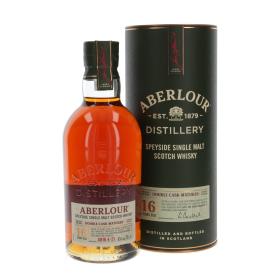
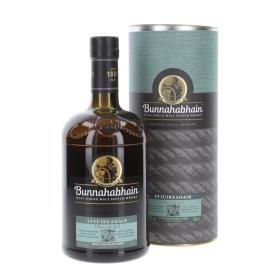
It is often not indicated on the label whether a whisky has been (re-)matured in a muscatel wine cask or a muscatel sherry cask. However, most whiskies on which a muscatel finish is indicated come from casks that previously contained muscatel fortified wine.