

Scotch Whisky - Scottish whisky celebrated worldwide for its tradition and quality - includes Single Malt, Blended Scotch, Blended Malt, Single Grain and Blended Grain. On this page you can find out more about regional styles, production methods and the unique variety of flavours ranging from mildly fruity to strong and smoky.
Scottish whisky production serves as a model for distilleries around the world and has earned a reputation for the highest quality. No Scottish celebration is complete without a glass of whisky, the so-called dram.
What is Scotch Whisky?
Is there a difference between Scotch whisky and Scotch? The clear answer is:
NO!
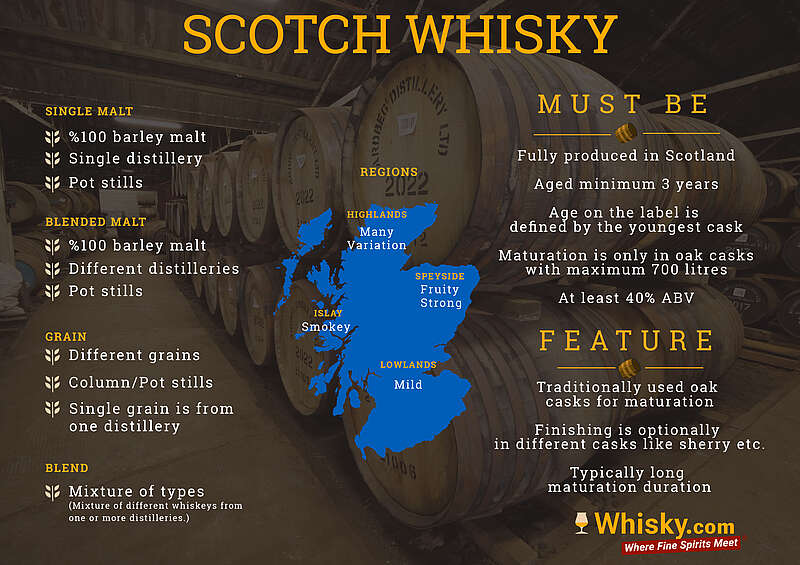
Scotch whisky is a whisky produced in Scotland that is matured in oak casks for at least three years. It is produced from water, barley and yeast, and the distillation, maturation and bottling must take place in Scotland. In addition, the alcohol content must be at least 40 per cent by volume.
When can a whisky be called Scotch Whisky?
A whisky can only be called Scotch if it has been distilled and matured in Scotland.
Difference between Whisky and Whiskey
Distilleries emphasise their origin through the spelling. A "whisky" signals Scottish, Japanese, Canadian or German origin; a "whiskey" indicates Irish or American origin.
Scotch whisky - always without an "e":
A genuine Scotch whisky follows the strict specifications of the "Scotch Whisky Act" and always bears the spelling without an "e".
Irish whiskey - always with an "e":
In Ireland, "whiskey" is traditionally spelt "whiskey". So if you enjoy a Jameson, Bushmills or Tullamore D.E.W., you are consciously ordering an "Irish Whiskey".
You can find everything you need to know about the spelling of "whisky" and "whiskey" in our detailed article:
Whisky vs. whiskey - spelling & origin
The production process: how is Scotch Whisky made?
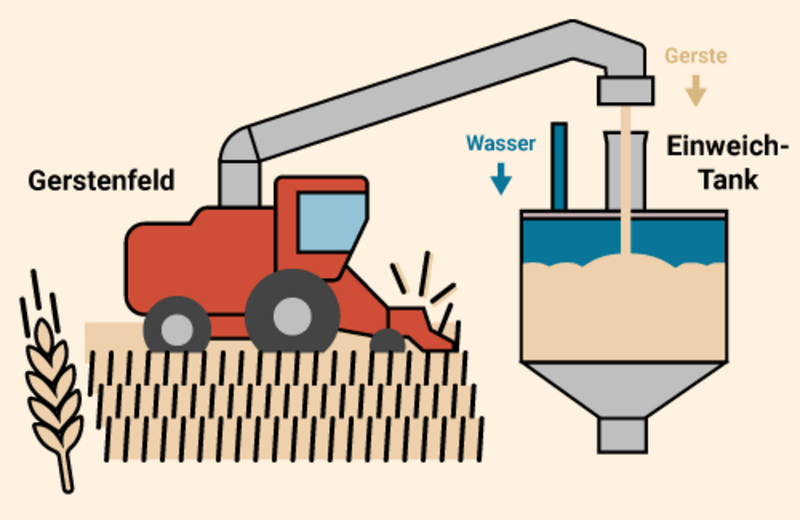
We have dedicated a separate chapter to this extensive topic.
Scottish Single Malt
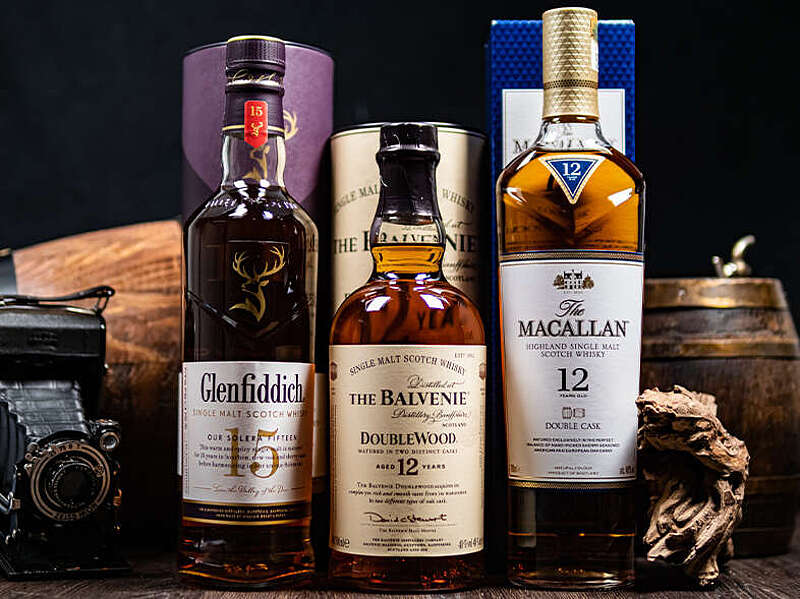
90% of all Single Malts come from Scotland - but only 10% of all Whiskies worldwide are Single Malts!
Malt whisky is one of the finest Whiskies and is mainly produced in Scotland. The Single Malt Whisky among the Scottish Whiskies may only be distilled from malted barley in pot stills. Malting is a complex process that used to be very time-consuming and physically demanding without modern technology. Today, the process has been industrially optimised. Scottish Single Malt is distilled twice, and very rarely three times, in pot stills. Since 2009, continuous production in column stills is no longer permitted. The Whisky is then matured for at least 3 years in mostly used oak casks. Due to the high demand, more and more Single Malt Whiskies are coming onto the market without an age statement. Bottles without an age statement do not show whether the Whisky was bottled after the minimum ageing period or only later. For many connoisseurs, however, a single malt needs to mature significantly longer.
A Whisky is labelled single if all the casks used for bottling come from a single distillery and have not been blended with Whiskies from other distilleries.
The distillate in the bottle must contain at least 40% alcohol!
The definition of single malt Scotch Whisky has become increasingly complex over the years. The Scotch Whisky Association's 78-page set of rules specifies every detail.
Video by Horst Lüning on the topic 'Definition of Scotch Single Malt Whisky' and a summary of the Scotch Whisky Association rules from 2014.
Blended Malt
Attention! Please do not be fooled by the usual term 'blended'. Here the word 'malt' is also included and together they make a separate variety. A blended malt is a mixture of single malts from different distilleries.
Grain Whisky
This term groups together Whiskies mainly from Scotland and Ireland that are not made from malted barley. They can contain any type of grain, including blends. Most grain Whiskies today contain wheat, as it offers a higher yield than maize, which used to be used for cost reasons. On column stills, grain whisky can be distilled higher than Malt Whisky. However, it contains less aromas.
Grain Whisky is mainly produced for the blended Whisky industry. These Whiskies are distilled almost exclusively with the cheaper column still distillation method. The maturation period is also rather short. Since 2014, there have been increased efforts to place the mild grain Whisky with connoisseurs, also as a single grain bottling.
Blend
Blend is any mixture of different whiskies (malt, grain). They differ in the variety, but above all in the origin, i.e. the distilleries.
Blended whisky gets its character from the ratio of whiskies from different distilleries, as each distillery produces a different flavour through its method of production. For the well-known varieties, the ratio is always the same so that the taste does not change. To produce the mass of blends, there are malt whisky distilleries that distil exclusively for the blended whisky industry and do not bottle single malts.
The majority of the whisky contained is usually grain whisky. The better the blend, the higher the proportion of malt whisky. Blended whisky is not only known in Scotland, many blends are also produced in Ireland.
Read more about it here .
The regions of Scotch Whisky
Scotland is divided into different whisky regions, each known for their unique flavours and styles. There are five official whisky regions:
- Speyside: This region is home to most of Scotland's distilleries. Whiskies from Speyside are often fruity and sweet, with notes of vanilla, apple and honey.
- Highlands: The Highlands are the largest whisky region in Scotland and offer a wide range of flavours - from light, floral whiskies to smoky, strong aromas.
- Lowlands: Whiskies from the Lowlands tend to be lighter and smoother, with grassy and floral notes.
- Islay: This island is known for its heavily peated and smoky whiskies, which often have intense maritime notes.
- Campbeltown: Although there are only a few distilleries in this region today, the whiskies here are rich and complex, often with salty, maritime notes.
What does Scotch taste like?
The flavour of Scotch varies depending on the region, production method and storage. A single malt whisky from Speyside often has a sweeter, fruitier flavour, while an Islay whisky is known for its peaty, smoky character. In general, it can be said that Scotch can offer a wide range of flavours: from sweet notes such as vanilla and honey to fruity notes such as pear and apple, to spicy, smoky or even salty nuances.
How do you drink Scotch Whisky?

Scotch whisky can be enjoyed in different ways, depending on personal preference. Many connoisseurs prefer to drink Scotch neat or "on the rocks", i.e. with an ice cube. Others dilute the whisky slightly with water to bring out its flavours better. Scotch can also be enjoyed in cocktails such as the classic "Old Fashioned". There are no fixed rules - the important thing is to drink the whisky the way you like it best.
Conclusion
Scotch whisky is not just a drink, but a piece of Scottish culture. With its strict production specifications and regional diversity, it offers an impressive range of flavours and styles. Whether as a single malt, blended Scotch or grain whisky - the world of Scotch is fascinating and invites you to discover it. Whether you are a beginner or an experienced whisky connoisseur, there is always something new to try and appreciate.







To comment, you must be logged in